
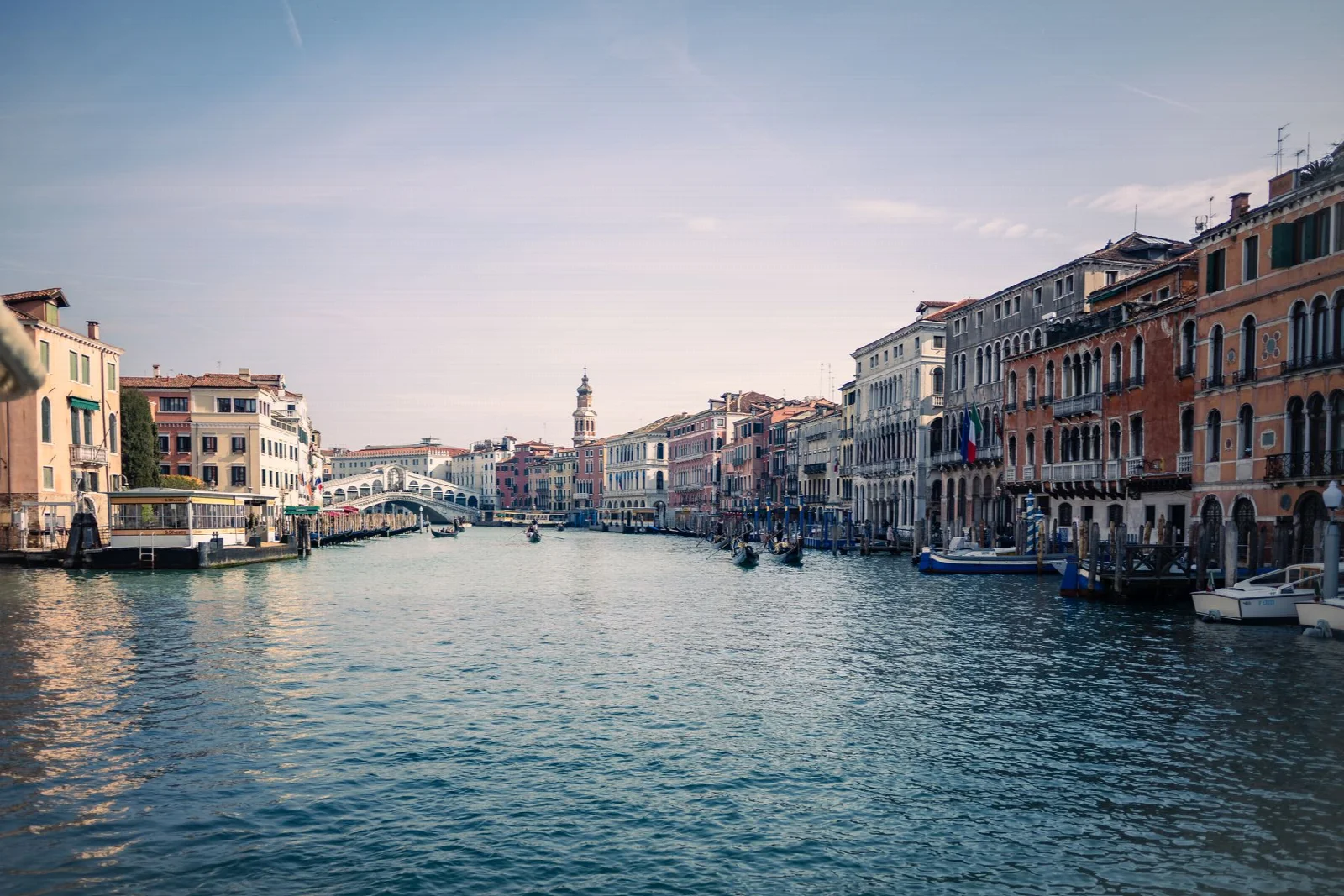
In Venice, a route that looks straight on a map can become a sequence of bridges, waterside paths and narrow passages. The Tatilmerkezi Stork suggests letting that rhythm shape the visit. Begin with San Marco's grand setting, explore the area around Rialto and leave room to pause along the Dorsoduro waterfront. This Venice travel guide connects the famous views with practical choices about time, transport and where to stay.
Start with a realistic pace
Two full days offer a useful introduction to San Marco, Rialto and Dorsoduro. A third day makes an island outing such as Burano easier to enjoy. One day can still provide a memorable central walk, but combining several major interiors with island travel is an ambitious use of it. These are itinerary suggestions rather than official minimum visiting times.
If you arrive before check-in, arrange where to leave luggage. Carrying bags repeatedly over bridges can use much of the energy intended for exploring. Consider giving one morning to walking and another to a selected indoor visit. An empty part of the schedule can become a particularly enjoyable pause beside the water.
San Marco: the square and its interiors
Piazza San Marco brings the basilica facade and bell tower into one of Venice's most recognisable settings. Stop near an entrance to the square before approaching individual details. A wide view helps reveal how the surrounding buildings frame the space. Even without an indoor visit, this deserves more than a hurried photograph and an immediate departure.
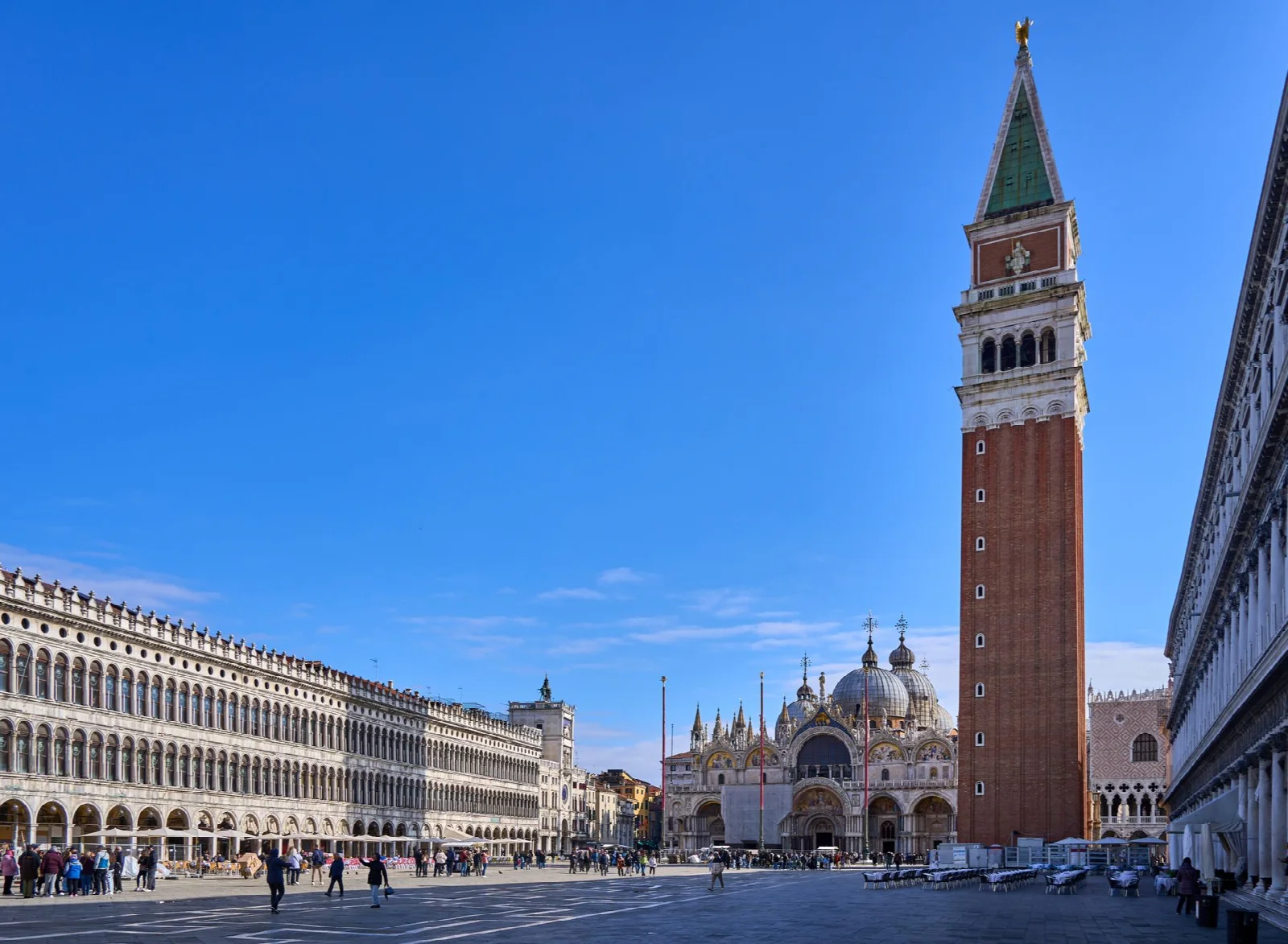
The basilica's official ticket system separates the available visiting areas and products. Check exactly what your selection includes. The square, basilica, bell tower and nearby Doge's Palace should not be treated as a single attraction with one universal ticket. Access to the basilica may change temporarily for worship. Leave an arrival margin before a reservation and keep the following part of the day flexible.
Rialto and the Grand Canal
Look along both banks as you approach Rialto Bridge. Boats, landings and movement beside the water make the canal more than a static view. Instead of relying on the crowded centre of the bridge for every photograph, look for a perspective from the bank that includes the arch and the width of the canal together.
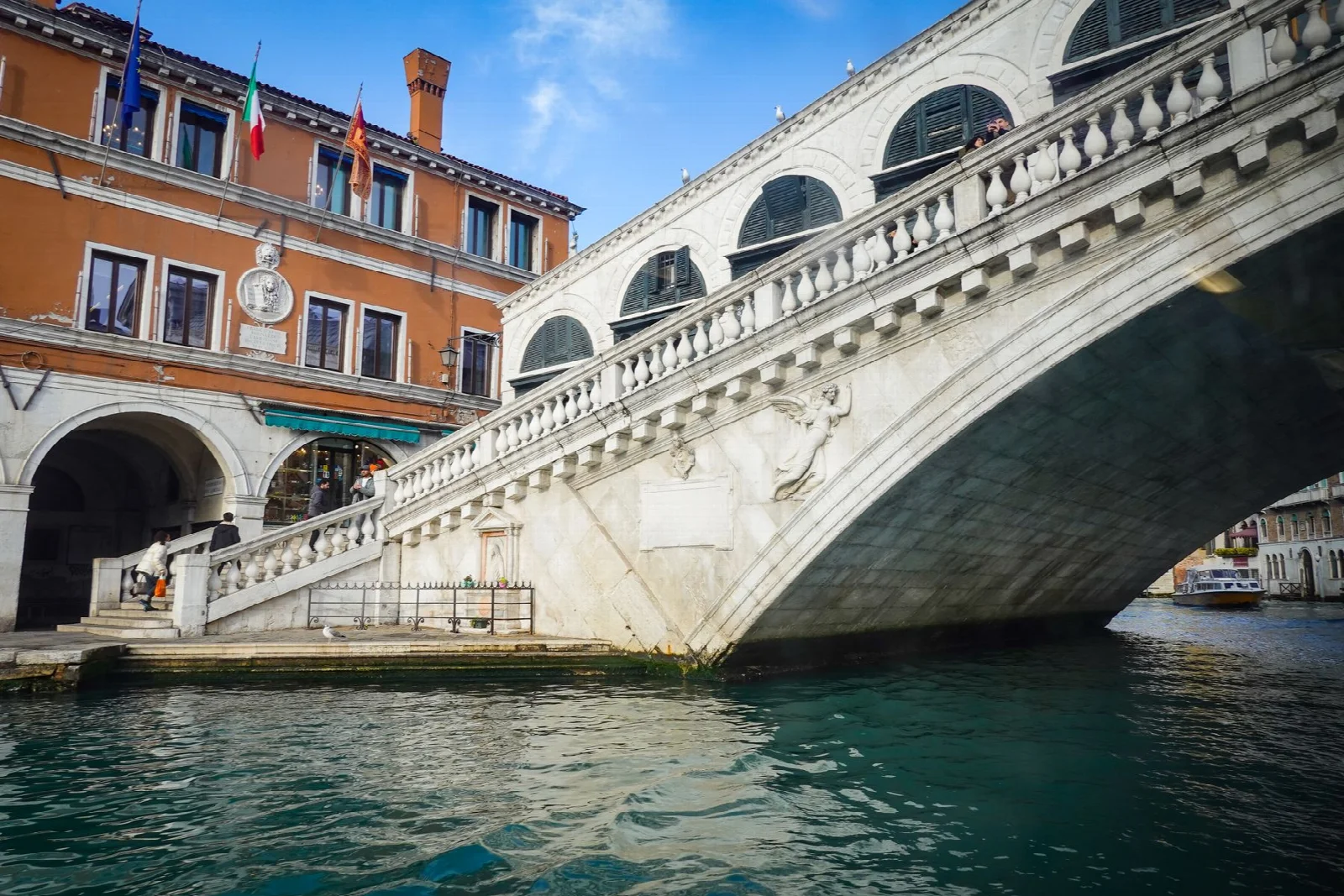
If the Rialto market interests you, consult the municipality's current market information before planning the visit. The fruit and vegetable area and the fish market should not be assumed to share identical schedules. Combine the surroundings with nearby streets and a meal break without making shopping compulsory. Ask before photographing people or stalls at close range.
Dorsoduro: art and a waterside walk
The domes of Santa Maria della Salute give this side of Venice a distinctive outline. Dorsoduro can form a separate chapter of the trip, pairing art with time beside the water. The Accademia area, Peggy Guggenheim Collection and Salute offer different interests within the district; entering every collection is optional.
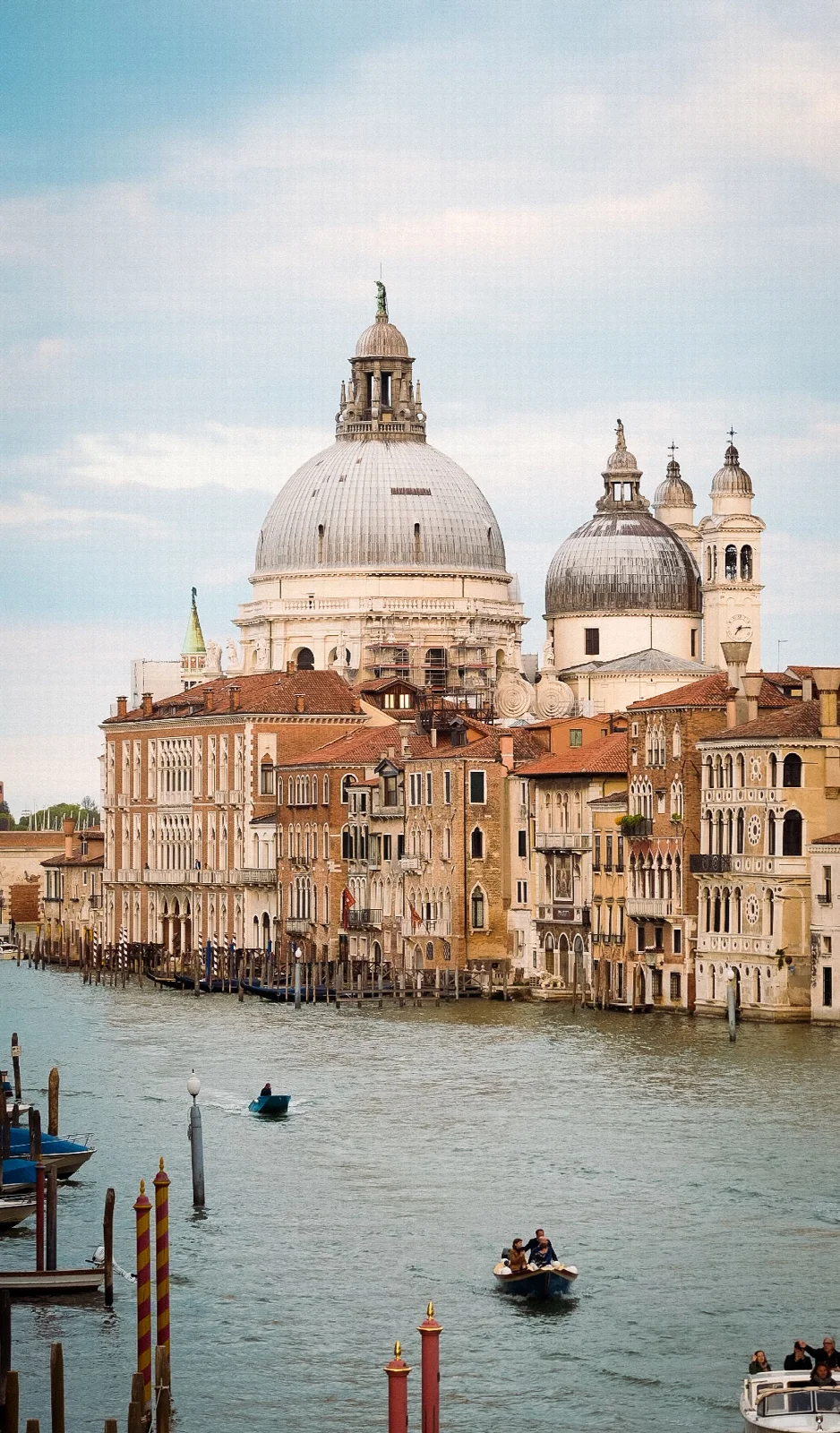
Choose the collection that appeals most, then arrange the walk around it. A pause after a museum can be more rewarding than joining another admission queue immediately. In windy weather, shorten the exposed part of the route. Calm water in a photograph is a record of that scene, not a promise about conditions on your visiting day.
Give Burano its own island outing
Burano adds a different colour palette to a Venice trip. Alongside the brightly painted houses, the official tourism information highlights its lace tradition and Museo del Merletto. Visit with curiosity about the relationship between streets, water and buildings, rather than treating the island as a search for one photogenic doorway. These are homes as well as popular subjects.
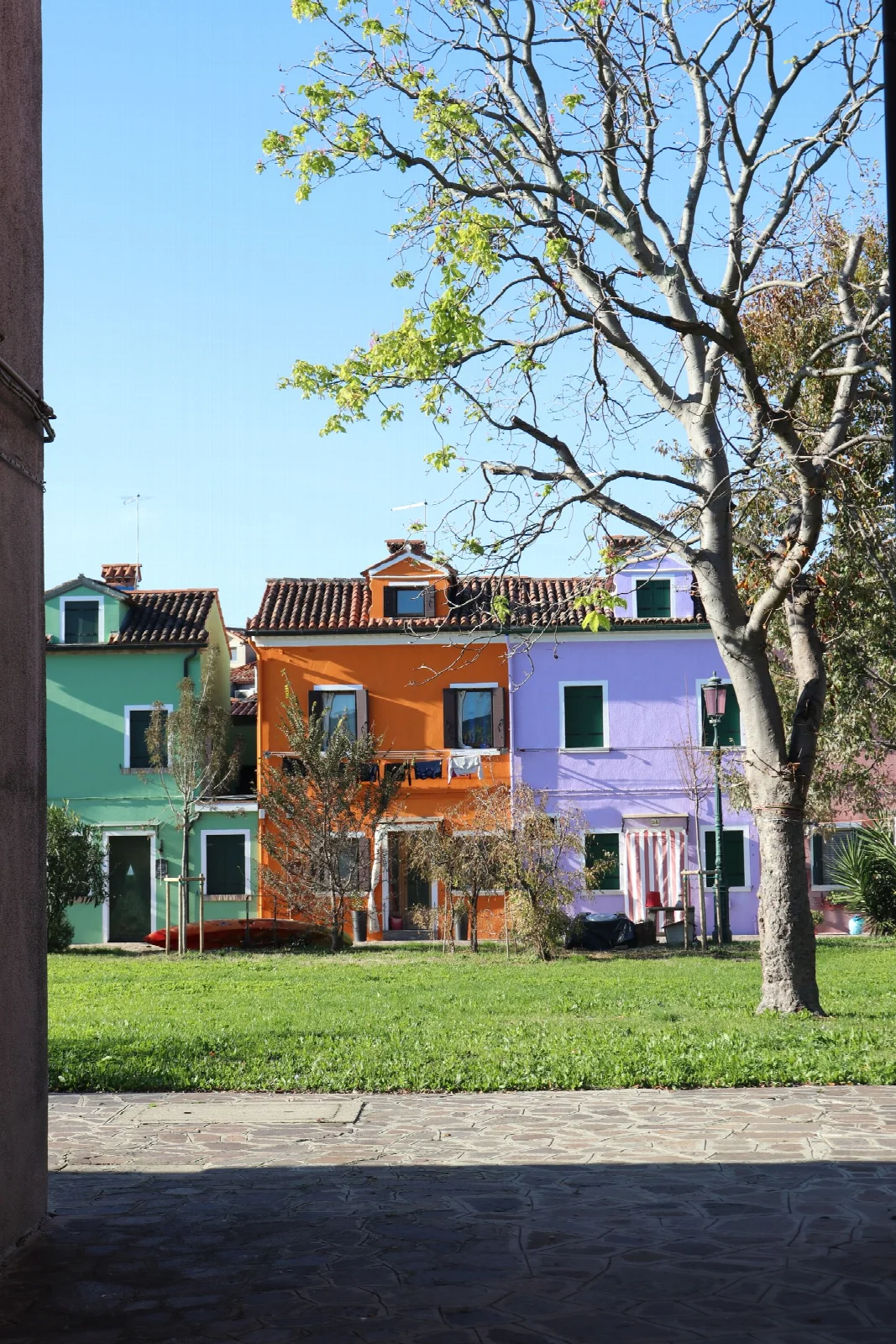
Check the official journey planner for departure and return options on the day. An island outing includes waiting and walking to the landing as well as time on the boat. Several islands followed by a fixed museum appointment in central Venice can leave little flexibility. Burano alone can make a satisfying outing without adding every nearby destination to the same day.
Cannaregio and Castello between the landmarks
On a second or third day, include a neighbourhood walk beyond the principal squares. Pick a modest destination in Cannaregio or Castello, then explore nearby canals and smaller open spaces. Saving a main stop or landing for the return journey can provide orientation without requiring constant attention to a map.
These districts should not be advertised as permanently quiet or free of visitors. Crowds change with time, events and location. Their value is the opportunity to see Venice beyond a single postcard composition. Keep residential entrances clear, make space for others in narrow passages and avoid turning everyday activities into a spectacle.
Vaporetto tickets and airport connections
Water buses can be an important part of a Venice itinerary. Before choosing a pass, count the journeys you expect to make and decide which day includes an island outing. Read the official coverage of ACTV products. In particular, do not assume that the separate Alilaguna airport service is included in a standard ACTV vaporetto product.
ACTV explains validation requirements at the start of journeys and when changing services. Follow the instructions for the physical or digital ticket you actually buy. At a landing, check the direction as well as the stop name. Treat airport transfer planning separately from sightseeing transport, and choose a product for journeys you intend to take rather than for the longest available validity alone.
The Venice access scheme is date dependent
The city's access scheme is separate from transport tickets and attraction reservations. When checked on 2 October 2026, the official portal stated that the 2026 trial period had ended and that, from 27 July, payment or an exemption request was no longer required for that period. This should not be interpreted as a permanent rule for subsequent years.
Return to the municipal portal once you know your travel dates. It announces the applicable period, visitor categories and any required process. Use the information for your actual date rather than an old screenshot. Keeping accommodation confirmations, city access information and attraction tickets separate can make the practical details easier to manage.
A two-day Venice itinerary
Begin day one around San Marco and make one selected interior your principal visit. Pause beside the water, then walk towards Rialto. After seeing the bridge from both sides, allow time for surrounding streets and a meal. Decide whether to return on foot or by water according to your energy and ticket coverage.
Give day two to Dorsoduro and a chosen art collection. After a Salute-area walk, leave the rest of the day for a more flexible neighbourhood outing in Cannaregio or Castello. Add Burano if you have a third day. For a one-day visit, keep the simpler San Marco–Rialto walking outline instead of assembling rushed fragments of all three days.
Where to stay and what to budget for
Consider San Marco for proximity to major monuments, Cannaregio for neighbourhood exploration and selected arrival routes, or Dorsoduro for an art-focused stay. If you compare Mestre accommodation, add daily travel time and cost to the room rate. No district guarantees that every property will be inexpensive or quiet.
Check the nearest landing, intervening bridges, floor and lift arrangements. A short distance on a map can feel different with luggage. Separate accommodation, transport and paid interiors in your budget, then consider optional experiences such as a gondola ride. A memorable trip does not depend on purchasing every activity; an unhurried walk can be a highlight in its own right.
Meal breaks and access needs
A small restaurant or bacaro can offer a welcome change of pace. Read the menu and ask about portions and prices before treating small plates as a complete meal. Mention dietary needs clearly, especially if you do not want seafood. An unfamiliar local name does not establish that a dish is safe for an allergy. Clarify table-service conditions before ordering.
Bridges, steps and changing water levels can affect routes. With a pushchair or mobility requirement, research suitable crossings rather than relying on the shortest line on a map. Consult current municipal accessibility information and weather guidance. A photograph from another day cannot establish whether a particular route will be convenient during a high-water warning.
Frequently asked questions
Can you walk everywhere in Venice?
Many central sights can be connected on foot, but an outing to Burano requires water transport. Luggage and mobility needs may also change the preferred route.
Does a vaporetto ticket include an airport boat?
Not every product does. Distinguish ACTV from Alilaguna and read the service coverage of the ticket you intend to buy.
Are two days enough for Venice?
They provide a useful beginning for the centre and Dorsoduro. A third day offers more flexibility for an island outing or several major collections.
Sources and current visitor information
Information checked on 1–2 October 2026. Recheck official admission, works and menu arrangements for your travel date.
- actv.avmspa.it — venice urban services
- cda.veneziaunica.it — en
- tickets.basilicasanmarco.it — en
- veneziaunica.it — markets
- veneziaunica.it — plan your trip
- veneziaunica.it — dorsoduro the art district
- veneziaunica.it — burano
The Tatilmerkezi Stork is our brand's storytelling character. This guide combines official sources and editorial route suggestions; it is not a personal travel diary.