
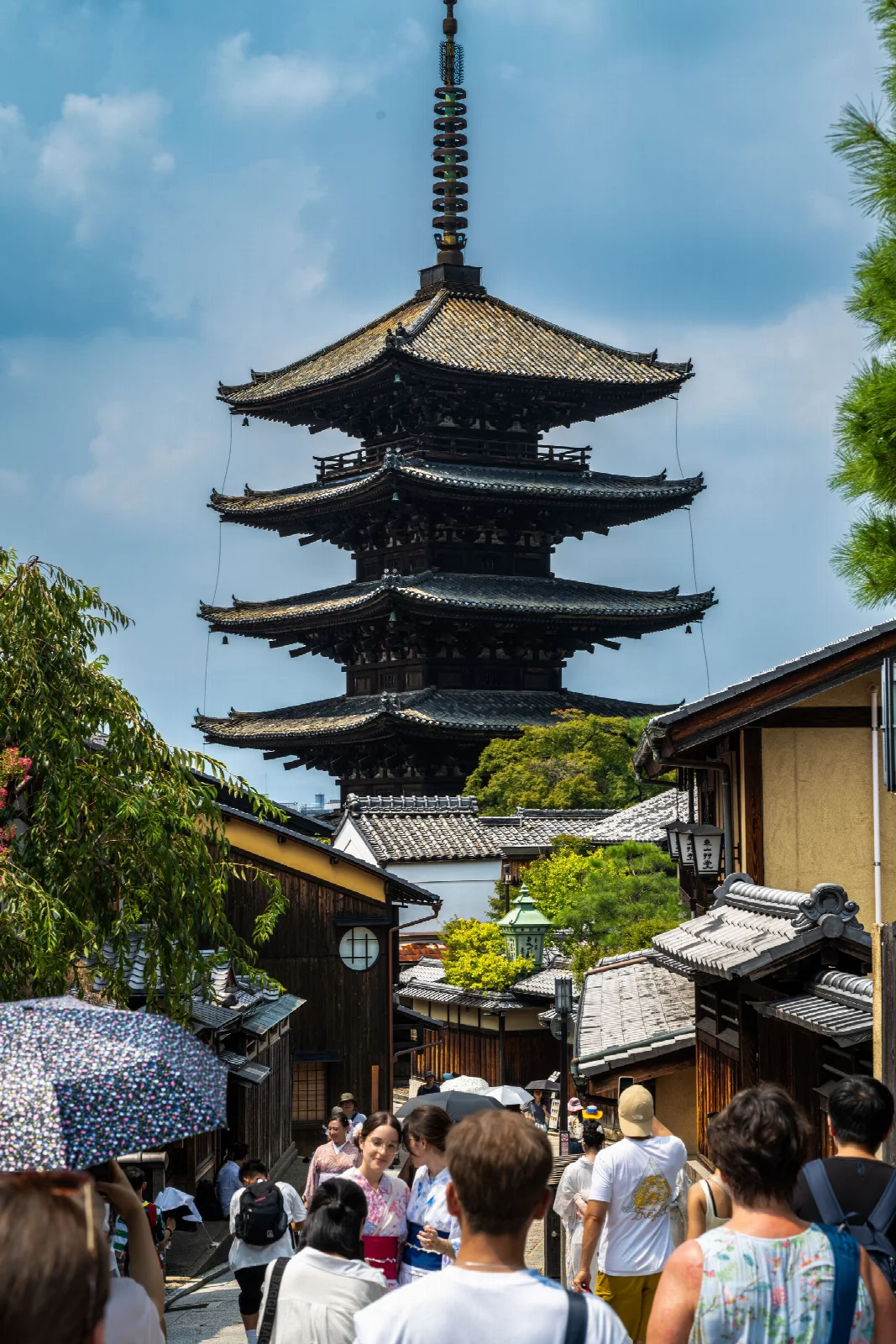
Kyoto's beauty can appear in the shadow of a wooden facade or in a walk that slows beside the river. Here the Tatilmerkezi Stork invites you to lower the pace: look carefully at a street, leave time for tea and connect neighbourhoods thoughtfully rather than trying to visit every temple in one day. Giving Higashiyama, Arashiyama and the central food streets separate space in your itinerary makes it easier to appreciate their different moods.
Plan Kyoto by area
Kyoto's famous sights are not all next to each other. Gion and Kiyomizu in the east, Arashiyama in the west and Fushimi in the south involve different transport choices. Mark the stops for each day in the same colour on a map. If those marks are scattered across three distant areas, much of the day may be spent travelling rather than visiting. Two or three full days offer a flexible framework for an introduction.
Choose a main visit for the morning and another for the afternoon, leaving a less structured evening walk where possible. If you spend longer than expected at a temple, the whole programme need not collapse. The Stork's preferred Kyoto rhythm has enough space between reservations for something small to catch your attention.
Higashiyama: slopes and wooden facades
The streets around Kiyomizu and Yasaka Pagoda provide an appealing introduction to Kyoto's traditional cityscape. Small shops and ceramic displays can turn the walk into more than a transfer between monuments. Pause to examine a shop window, notice the detail of a doorway or step aside for a view without rushing towards the next landmark.
Slopes and steps affect the pace. Do not estimate the walk as though it were a flat shopping avenue. Starting early may offer cooler conditions or different light, but it does not guarantee an empty neighbourhood. Keep shop entrances and pedestrian routes clear when taking pictures. The scenery belongs to a working district as well as a visitor itinerary.
Kiyomizu-dera: more than a viewpoint
Kiyomizu-dera's main hall and hillside setting deserve to be considered together. Studying the official grounds map beforehand can help you understand the entrances and choose the sections that interest you. The temple is more than the single terrace familiar from photographs, and your visit can be as focused or expansive as your interests allow.
Special evening openings and seasonal events may have arrangements separate from ordinary visits. If a particular illumination is the reason you are travelling, verify its dates through the temple's own announcements. Allow time for admission and the hillside approach. A short stop in the neighbouring streets afterwards can make the experience feel more complete than immediately running for another connection.
Gion: be a considerate guest
A Gion walk does not need to revolve around seeing people in traditional dress. Look at the buildings and streets while respecting the neighbourhood's daily life. Follow private-access and photography signs; do not stop, follow or photograph geiko and maiko without permission. If you want to experience a performance, plan an appropriate ticketed programme rather than pursuing a chance encounter in the street.
Arashiyama: look beyond the bamboo
The tall stems and filtered light of Arashiyama's bamboo grove create a memorable setting. Yet reducing the area to a few minutes of photographs misses the chance for a more varied outing. Combine the walk with the riverside, a garden that interests you or an unhurried lunch. Choose one addition that suits your energy rather than automatically attaching every nearby attraction.
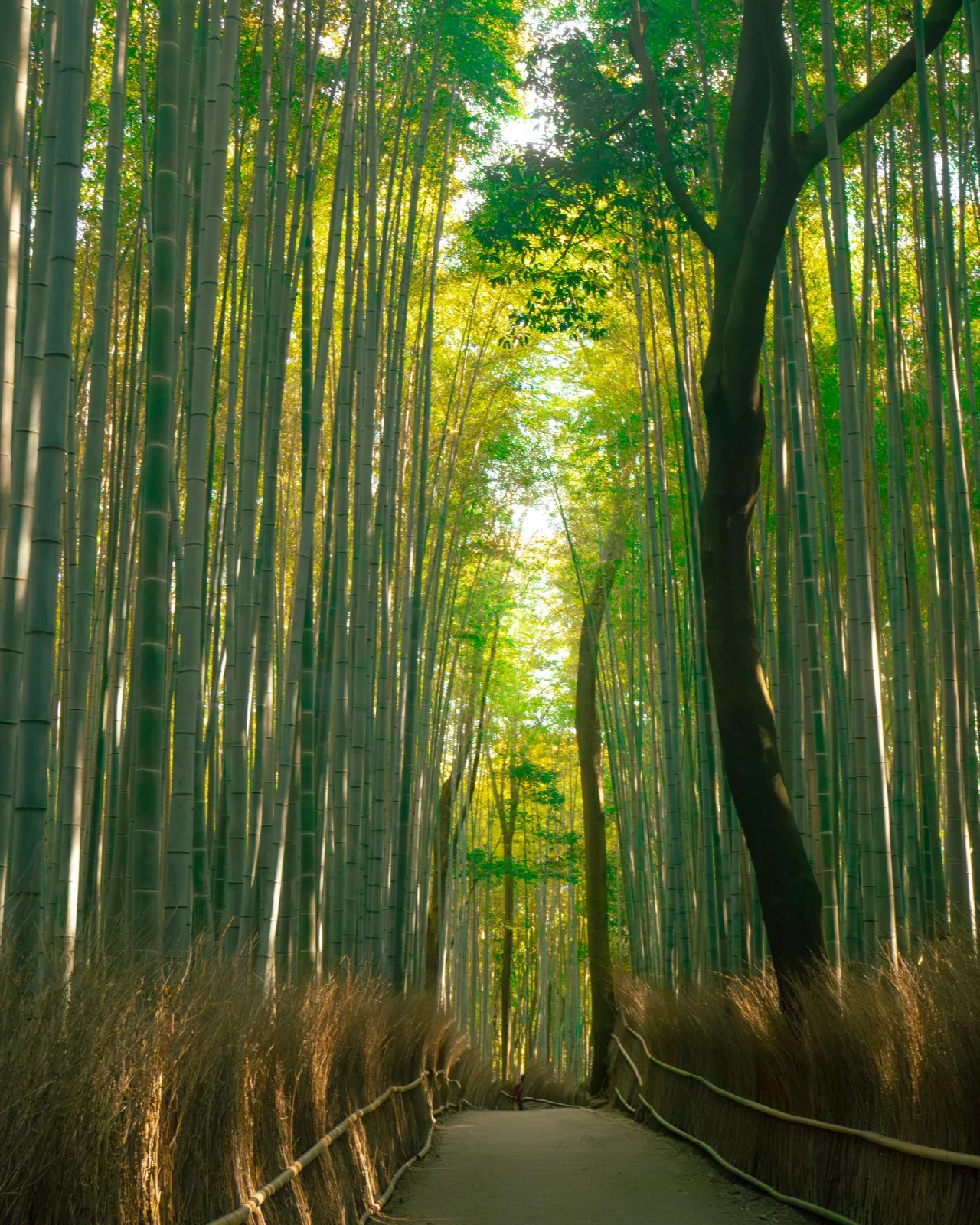
Stay on the marked routes and avoid damaging the bamboo. When the path is busy, let the flow of people guide where you stop instead of blocking it for a picture. Adjust your pace to wet surfaces after rain. The pleasure of this part of Kyoto lies in moving between different scenes, with greenery giving way to river views and small pauses along the way.
Togetsukyo: complete the walk by the river
Togetsukyo Bridge and the Katsura River add a more open landscape to an Arashiyama visit. After looking up through the bamboo, the broad river view provides a satisfying change of perspective. You can search for a viewpoint from the bank instead of stopping in the middle of the bridge, then break the walk somewhere suitable to sit.
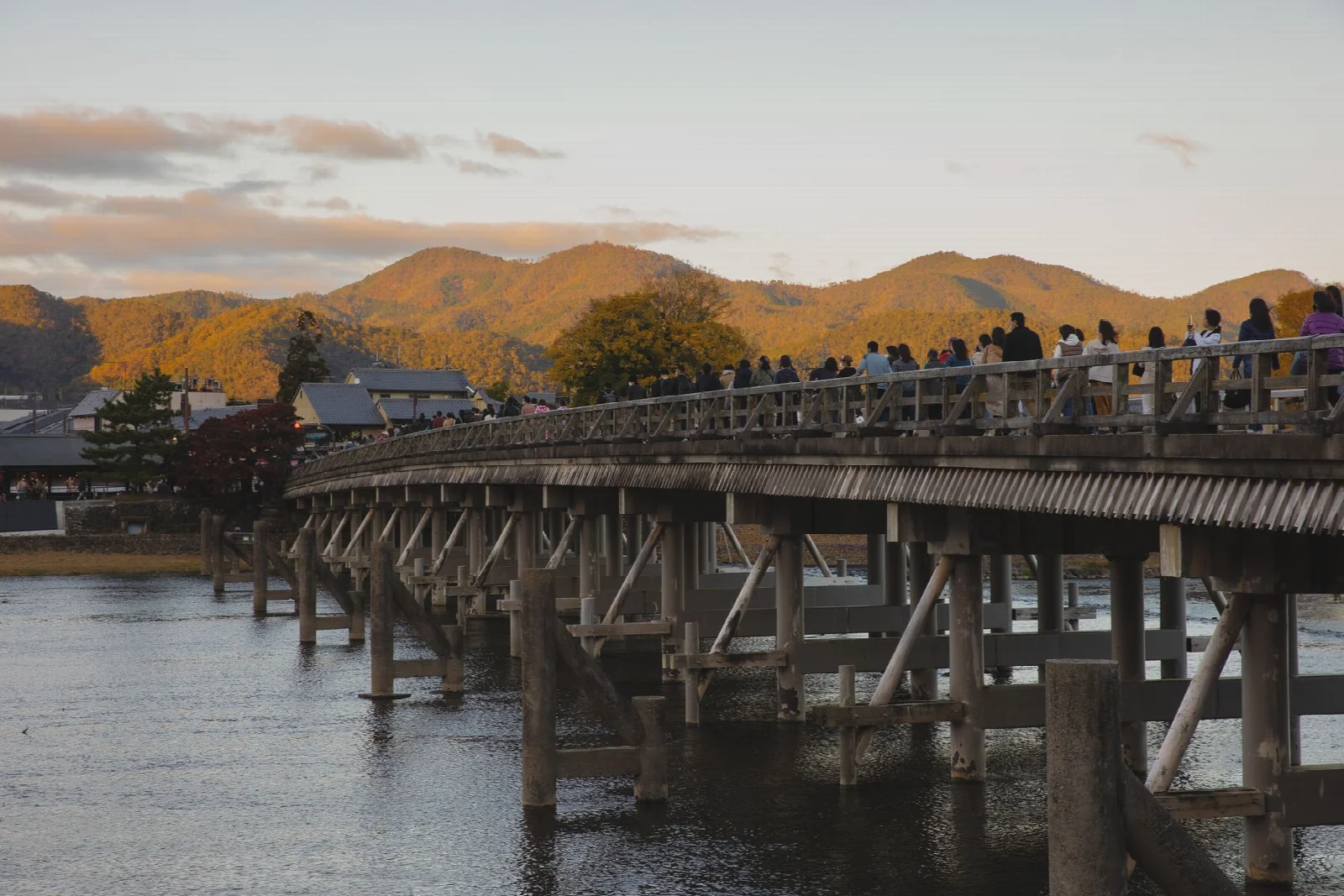
The season, light and water change the scene. Rather than expecting an autumn photograph to be reproduced during another month, notice the details of your own visit. A boat trip or another ticketed activity requires separate research; it is not automatically part of a bridge walk. For the return journey, check how your chosen station connects with the area where you are staying.
Fushimi Inari: allow time for the south
Fushimi Inari Taisha is a place of worship known for its torii gates. A brief visit to the lower area is different from a longer walk on the hillside. Decide how far to continue according to your fitness, the weather and the rest of the day. There is no requirement to complete every section simply because it appears on a map.
Follow the shrine's photography, food and access rules. Keep out of restricted areas, avoid damaging structures and do not feed wildlife. The official visitor guidance also lists restrictions on commercial photography. Recognising the site as a sacred place before treating it as a photographic opportunity helps keep the visit respectful.
Kamo River: a pause in the day
A short Kamo riverside walk can soften a programme of temples and shopping streets. You need not attach a major activity to every part of the route. Stopping at an appropriate stretch of bank and looking across the city may be enough to absorb the day's impressions. If you arrange to meet someone, choose a particular bridge or exit rather than the river in general.
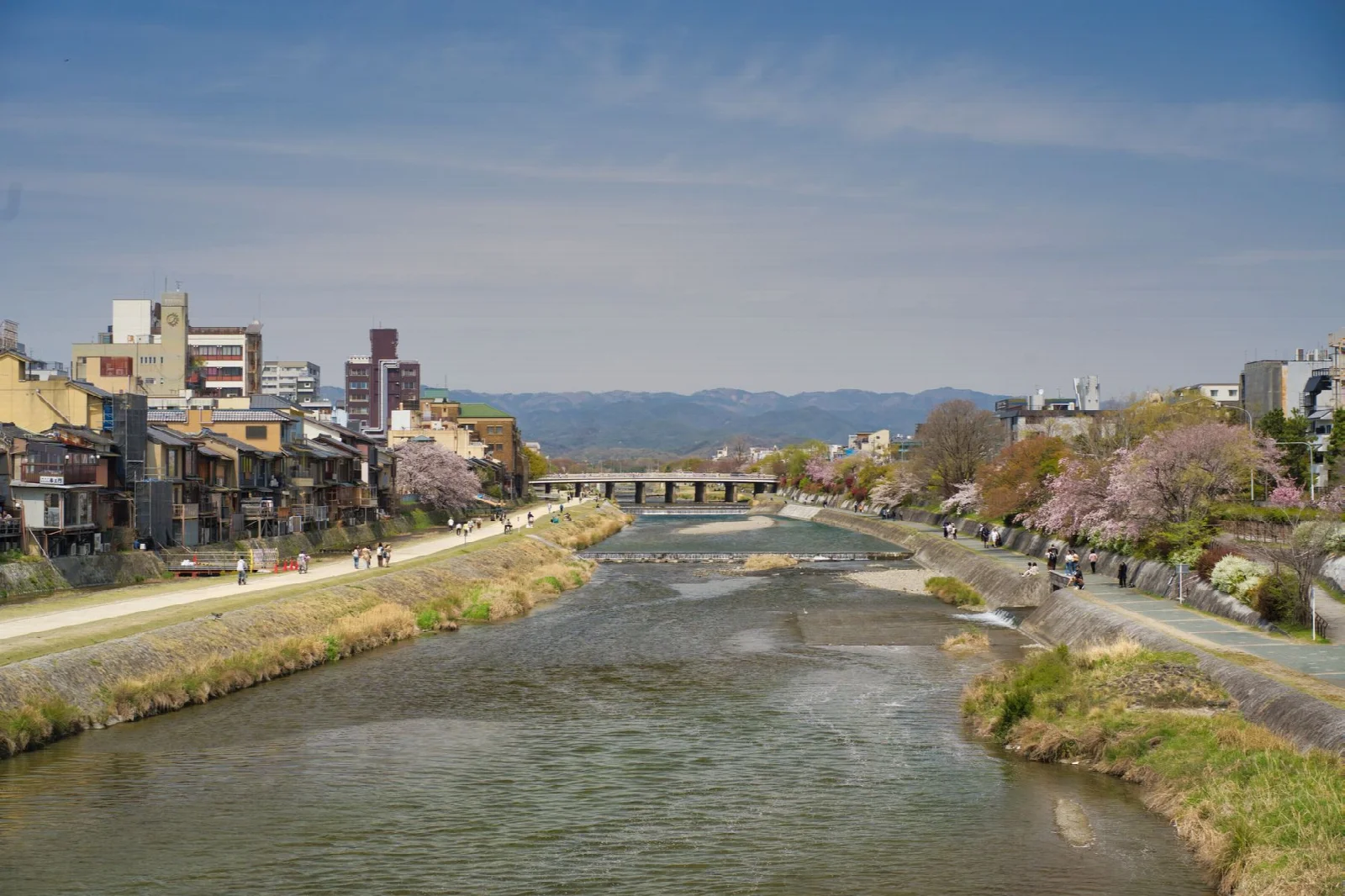
Check steps and surface conditions where you approach the bank. Take care near the water with children, and choose a different route in poor weather or when water levels make the riverside unsuitable. If dinner is in the centre, the walk can lead naturally towards it. A memorable pause sometimes comes from a simple place where you allow yourself to stop, rather than a paid observation point.
Nishiki: a passage into Kyoto food
Nishiki Market introduces pickled vegetables, tofu products, fish and many smaller food discoveries. Its stalls are a reminder that exploring the city's cuisine is not limited to elaborate restaurants. Eat purchases where the shop permits: the market's official guidance asks visitors to avoid eating while walking. That leaves room for other people and gives you time to pay attention to what you have chosen.
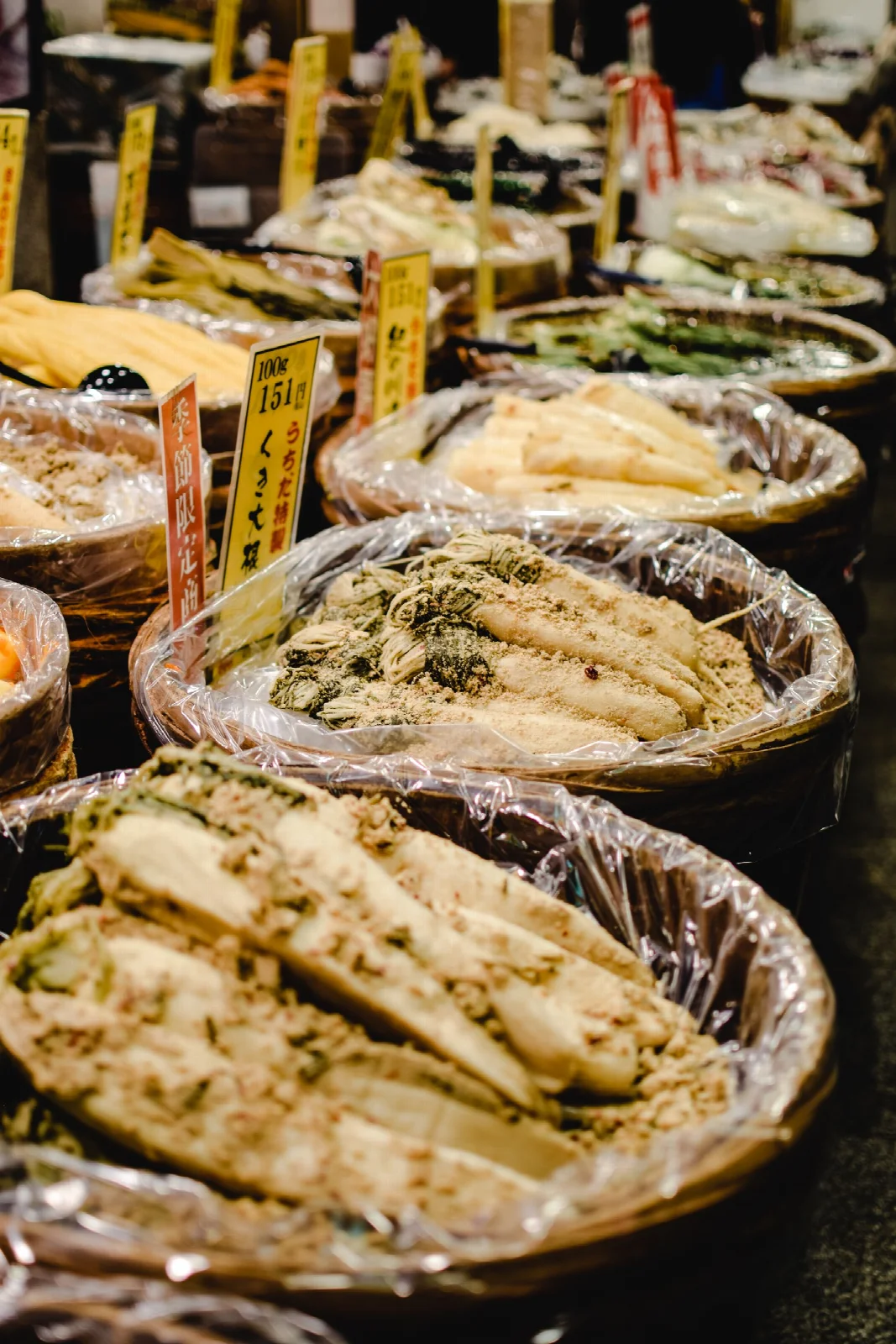
Ask about a product's flavour or ingredients if you are curious. Small purchases let you explore without filling your bag simply because the displays look attractive. If you intend to take something back to your hotel or home, check storage and transport requirements with the seller. Labels in photographs are not a current price list; inspect the actual menu on the day.
Food and a well-placed tea break
Yudofu, yuba and sweets served with tea are among the possibilities for exploring Kyoto's food. Do not assume a tofu-based dish contains only plant ingredients; ask about the stock and sauces as well. A longer kaiseki meal deserves advance thought about the menu, duration and reservation arrangements. On a shorter sightseeing day, a straightforward lunch and a carefully placed tea break can be just as satisfying.
Treat the meal as part of the day's geography. Booking lunch on the opposite side of the city can make a gentle neighbourhood walk surprisingly complicated. Conversely, leaving every meal to the last minute may not suit a group with particular dietary needs. A small number of researched options gives you flexibility without creating a second itinerary made entirely of restaurants.
Transport and accommodation
Kyoto's official transport guide considers rail, subway and bus options together. Compare a train connection and walk with a bus journey instead of assuming one mode is best for every destination. Carrying a large suitcase through narrow sightseeing streets can make the day awkward; ask about luggage storage before you leave your accommodation. Check which operators are included in a ticket or pass rather than treating all services as one network.
The Kyoto Station area may suit travellers prioritising intercity connections, while a central base can be convenient for meals and evening walks. If you are considering hillside areas, examine the slopes and steps all the way to the property entrance. Decide how you value a quieter room, proximity to evening activity and the practical journey back after a full day.
A suggested three-day Kyoto plan
Give the first day to Kiyomizu-dera and Higashiyama, with an appropriate Gion walk later. Keep the second day around Arashiyama, the bamboo grove and Togetsukyo; if you add a garden or museum, lighten the remaining schedule. On the third day, allow separate time for Fushimi Inari, then consider Nishiki and the Kamo in the centre. Adapt this editorial outline to opening arrangements and your accommodation.
The order is flexible. A forecast for heavy rain may make you prefer a shorter outdoor route, while a particular museum opening can become the anchor for a day. Decide which visit matters most and make the others optional. This approach is more useful than trying to reproduce the same sequence regardless of circumstances.
Frequently asked questions
Are two days enough for Kyoto?
They can provide a rewarding introduction if you choose a limited number of areas. Prioritising an eastern and a western day is more comfortable than trying to cover every famous stop. A third day creates room for the south and more time in the centre.
Do I need to see every major temple?
No. Choose according to your interest in architecture, gardens, history or religious culture. A walk or meal break after a visit can create more variety than a long sequence of similar-looking stops.
What is the best time for photographs?
It depends on the place, season and weather. Early does not always mean empty. Check access and photography restrictions first, then choose a composition that respects other people and neighbourhood life.
Sources and current visitor information
Information checked on 1–2 October 2026. Recheck official admission, works and menu arrangements for your travel date.
- inari.jp — request
- kyoto.travel — gion kiyomizu
- kyoto.travel — destinations
- kyoto.travel — kyoto nishiki food market
- kyoto.travel — food and drink
- kyoto.travel — getting around
- kyoto.travel — gion manner message from southern gionmachi
- kiyomizudera.or.jp — en
- kiyomizudera.or.jp — visit
- kyoto.travel — fushimi
- kyoto.travel — saga arashiyama
The Tatilmerkezi Stork is our brand's storytelling character. This guide combines official sources and editorial route suggestions; it is not a personal travel diary.